Water Supply & Availability
Every drop counts.
What We're Focused On
The Big Sky Headwaters Partnership helps facilitate efforts to balance available water supplies to sustain a broad range of needs—fisheries, wildlife, recreation, agriculture, and community water supply for current and future generations, including communities downstream.
- Big Sky is banking today's runoff for tomorrow's low-flow season. Every 100 acre-feet of spring runoff Big Sky stores adds roughly 1 cubic foot per second to late-summer streamflow, precisely when the Gallatin runs at its lowest and warmest.
- The Meadow Village aquifer alone can hold more than 500 additional acre-feet of water, and recharge work is already underway to put that capacity to use.
- More than 20 independent water providers serve Big Sky. Coordinating them is central to building one shared water strategy for the whole community.
- Conservation is having an impact: programs like Alpenscapes and community rebates have reduced water use across Big Sky.
Frequently Asked Questions
Understanding the work.
Why is water supply a concern in Big Sky?
Mountain communities like Big Sky rely on snowpack and seasonal runoff for their water supply. As the community grows and climate variability increases, the gap between peak water availability (spring) and peak demand (late summer) widens. Late-season streams run lower and warmer, stressing fish and aquatic life and reducing what's available to downstream water users. Big Sky's position at the headwaters of two major river systems makes thoughtful management especially important.
What does "Slow the Flow" mean?
“Slow the Flow” describes the Partnership's approach to keeping water in the watershed longer. Rather than letting spring runoff rush downstream, the goal is to capture and store it through natural systems and infrastructure—upper watershed recharge, engineered storage, stream restoration, and snowmaking—so that more water is available during late-summer low-flow periods.
Every 100 acre-feet of spring runoff that can be stored yields approximately 1 cubic foot per second (CFS) of additional late-summer baseflow. The Meadow Village aquifer alone has over 500 acre-feet of additional storage potential.
What has been accomplished?
- Water conservation programs through Alpenscapes and community rebates have reduced water use across Big Sky.
- The Gallatin River Task Force completed Water Balance and Aquifer Recharge studies that established the scientific foundation for current and future projects.
- Big Sky Water and Sewer District has completed reuse and water rights planning work that supports expanded beneficial reuse.
For more information, visit the Gallatin River Task Force Water Conservation Programs.
What projects are underway?
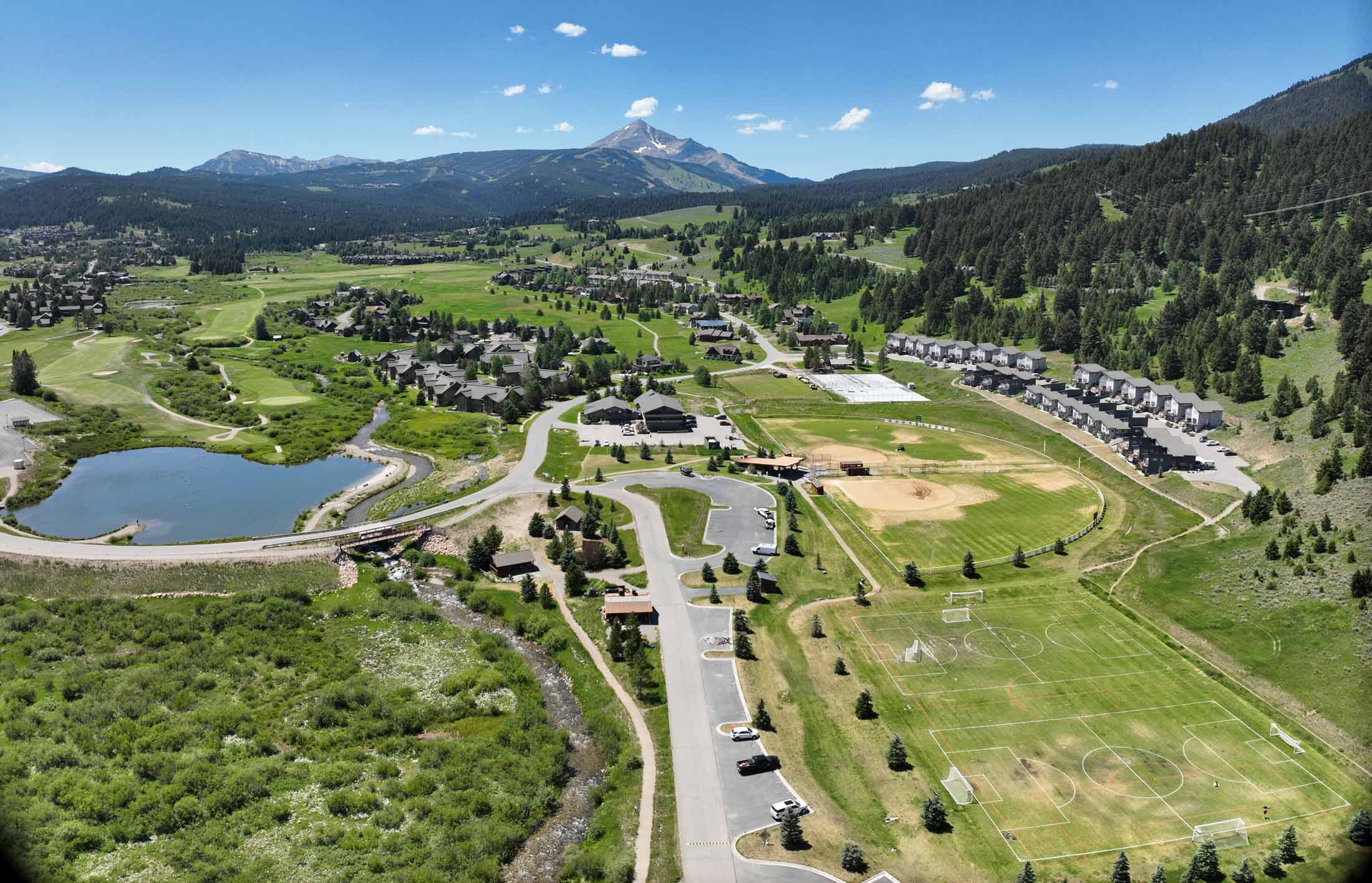
- Meadow Village Aquifer Recharge—optimizing the golf course and surrounding land to recharge the Meadow Village aquifer, which has more than 500 acre-feet of additional storage potential
- Engineered Alpine Lakes—infrastructure for capturing and storing high-elevation runoff
- Middle Fork and West Fork “Slow the Flow” coordination—capturing more spring runoff to benefit late-season baseflows
- Golf Course Recharge, coupled with West Fork Restoration, to address both water supply and ecological health simultaneously
What are the key challenges?
- Limited water supply relative to a rapidly growing community
- Shallow aquifers that are vulnerable to surface pollution
- Significant variability in snowpack and late-season stream flows
- Individual well withdrawals that can reduce stream flows and water availability for others
- More than 20 independent community water providers, making coordinated management difficult
What are we working toward by 2029?
- Improved ability to make thoughtful use of limited surface water and upper watershed recharge resources
- More consistent late-season flows for fish, aquatic life, and downstream water users
- Greater resilience to drought, climate variability, and wildfire