Resources & FAQs
Your Questions, Answered.
Frequently Asked Questions
About the Partnership
What is the Big Sky Headwaters Partnership?
The Big Sky Headwaters Partnership is a collaborative group of 40+ nonprofit, private, local, and state organizations working together since 2016 to address water challenges at the headwaters of the Gallatin and Madison Rivers in Montana. The Partnership helps facilitate solutions across three focus areas: Ecological Health of the River Systems, Water Supply and Availability, and Wastewater Treatment and Reuse.
What is the Big Sky Headwaters Plan?
The Big Sky Headwaters Plan is the comprehensive water management framework developed and published by the Partnership in 2018 and updated in 2024. It identifies current conditions, challenges, and prioritized actions across all three focus areas, and serves as the road map for the Partnership's work through 2029.
Who are the members of the Partnership?
The Partnership includes 40+ organizations spanning nonprofit groups, private businesses, local entities, and state agencies.
About Big Sky's Water
Where does Big Sky's water come from?
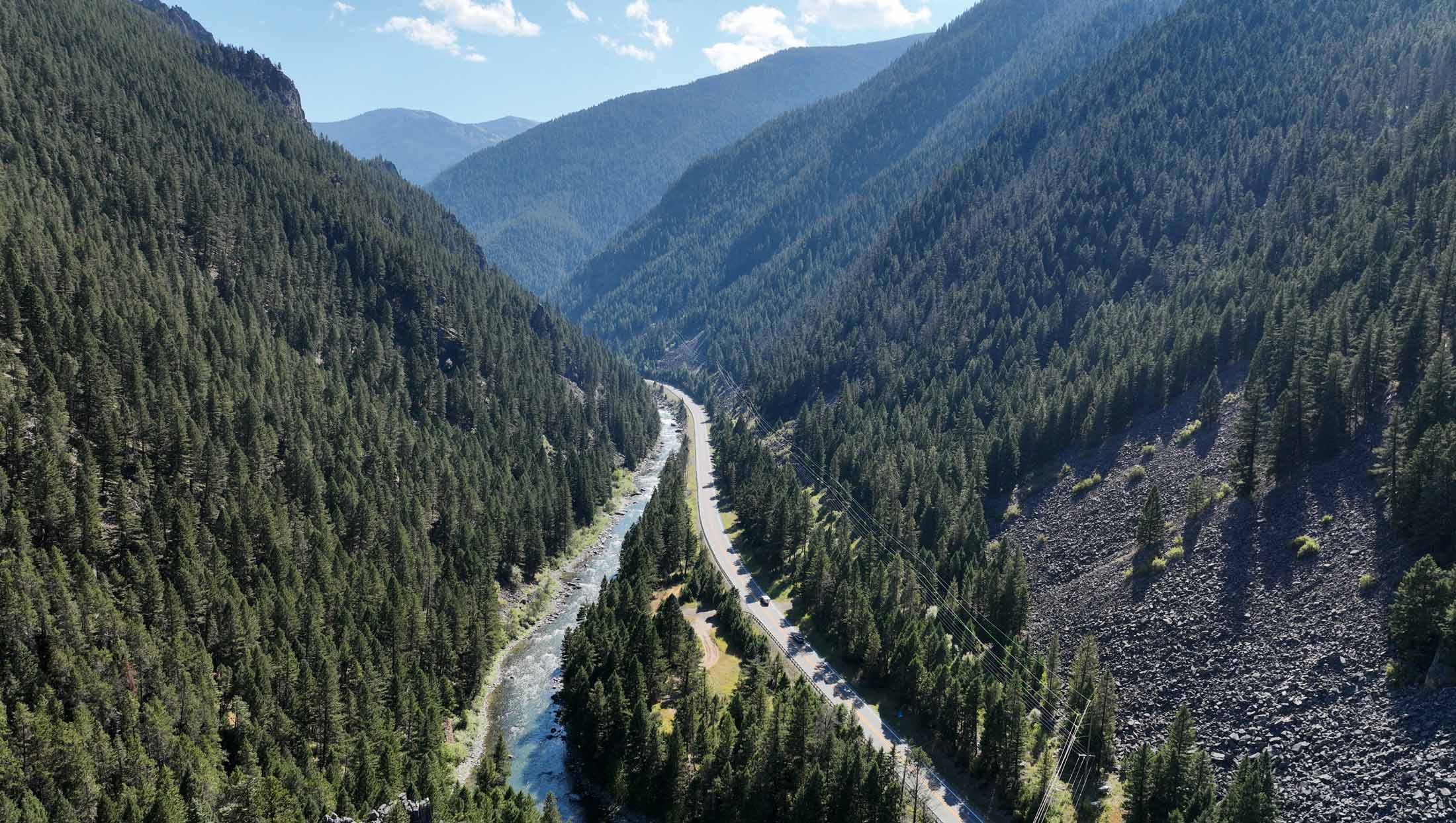
Big Sky's water supply comes primarily from snowpack and seasonal runoff in the Upper Gallatin and Madison River watersheds. The community relies on both surface water and upper watershed recharge. Because Big Sky sits at the headwaters of two major river systems, water decisions made here affect communities and ecosystems far downstream.
Where does Big Sky's treated wastewater go?
Unlike most communities, Big Sky does not discharge treated wastewater directly into rivers or streams. Instead, all treated wastewater is reused—for golf course and open space irrigation, snowmaking, and upper watershed recharge. Big Sky has practiced this approach for more than 30 years. It protects water quality in the Gallatin River and benefits downstream communities and water users.
What is "zero-direct discharge"?
Zero-direct discharge means that treated wastewater is never piped directly into surface water—such as the Gallatin River or its tributaries. Instead, it's treated to Class A-1 standards (the highest available) and put back to beneficial use, keeping pollutants out of our rivers and keeping more water available when it's needed most downstream.
What are the biggest water challenges facing Big Sky?
- Limited water supply relative to community and ecological needs
- Decreasing late-season stream flows that stress fish and aquatic life
- Rapid residential and visitor growth that has outpaced even the highest projections
- Algal blooms in the Upper Gallatin River system
- The complexity of coordinating across 20+ independent community water providers
- The cost of maintaining and expanding water infrastructure at the pace growth demands
What does Big Sky's water situation mean for communities downstream?
Big Sky's position at the headwaters of the Gallatin and Madison Rivers means that what happens here affects water quality and availability throughout the entire river system. Downstream communities—including agricultural users in the Gallatin Valley who rely on these rivers for irrigation—are directly affected by the water quality and quantity that originates in Big Sky. The Partnership's work protects and, in some cases, enhances the water that reaches those downstream users.
Can other mountain communities use Big Sky's approach?
Yes—and that's one of the Partnership's core goals. The Big Sky Headwaters Plan was developed as a replicable framework that other Montana and mountain communities can adapt to their own water challenges. Montana's Water Policy Interim Committee is currently examining water reuse as a statewide opportunity, with Big Sky's model as a leading example.