Wastewater Treatment & Reuse
200+ million gallons reused each year.
Big Sky doesn't pipe treated water back to the river. It reuses it.
Most communities treat wastewater and discharge it back into waterways. Big Sky takes a different approach—treating wastewater to the highest standards and putting it back to work for irrigation, snowmaking, and upper watershed recharge. More than 200 million gallons are reused every year.
What We're Focused On
The Big Sky Headwaters Partnership helps facilitate innovative wastewater treatment and reuse solutions that protect river health and boost water availability during critical low-flow periods. This means not just treating wastewater well—but finding beneficial uses for every gallon possible.
- Big Sky is a Zero-Direct Discharge community. Treated wastewater is never piped into the Gallatin River—instead, it's treated to the highest standard available and put back to work.
- More than 200 million gallons of treated water are reused here every year—for irrigation, snowmaking, and upper watershed recharge.
- Big Sky's reuse program isn't new—the community has irrigated its golf course and open spaces with reclaimed water for more than 30 years.
- In 2023, the Yellowstone Club became the first ski area in Montana to make snow using reclaimed water.
200M+
Gallons reused per year
220 acres
Of golf course & open space irrigation
30+ years
Of reclaimed water irrigation
Class A-1 water quality standards.
The highest water quality classification available—enabling all reuse applications from irrigation to snowmaking to upper watershed recharge.
Frequently Asked Questions
Understanding the work.
What is "zero-direct discharge" and why does it matter?
“Zero-direct discharge” means that treated wastewater is never piped directly into the Gallatin River or its tributaries. Instead, it's treated to Class A-1 water quality standards—the highest available—and reused for irrigation, snowmaking, and upper watershed recharge. This approach keeps harmful pollutants out of the Gallatin River system, protecting water quality for fish, wildlife, and downstream communities.
How is treated water being reused right now?
Big Sky's current reuse program handles more than 200 million gallons per year, including:
- 220 acres of irrigation reuse (golf course and open spaces)
- 50 acres of snowmaking reuse
- Upper watershed recharge through natural infiltration
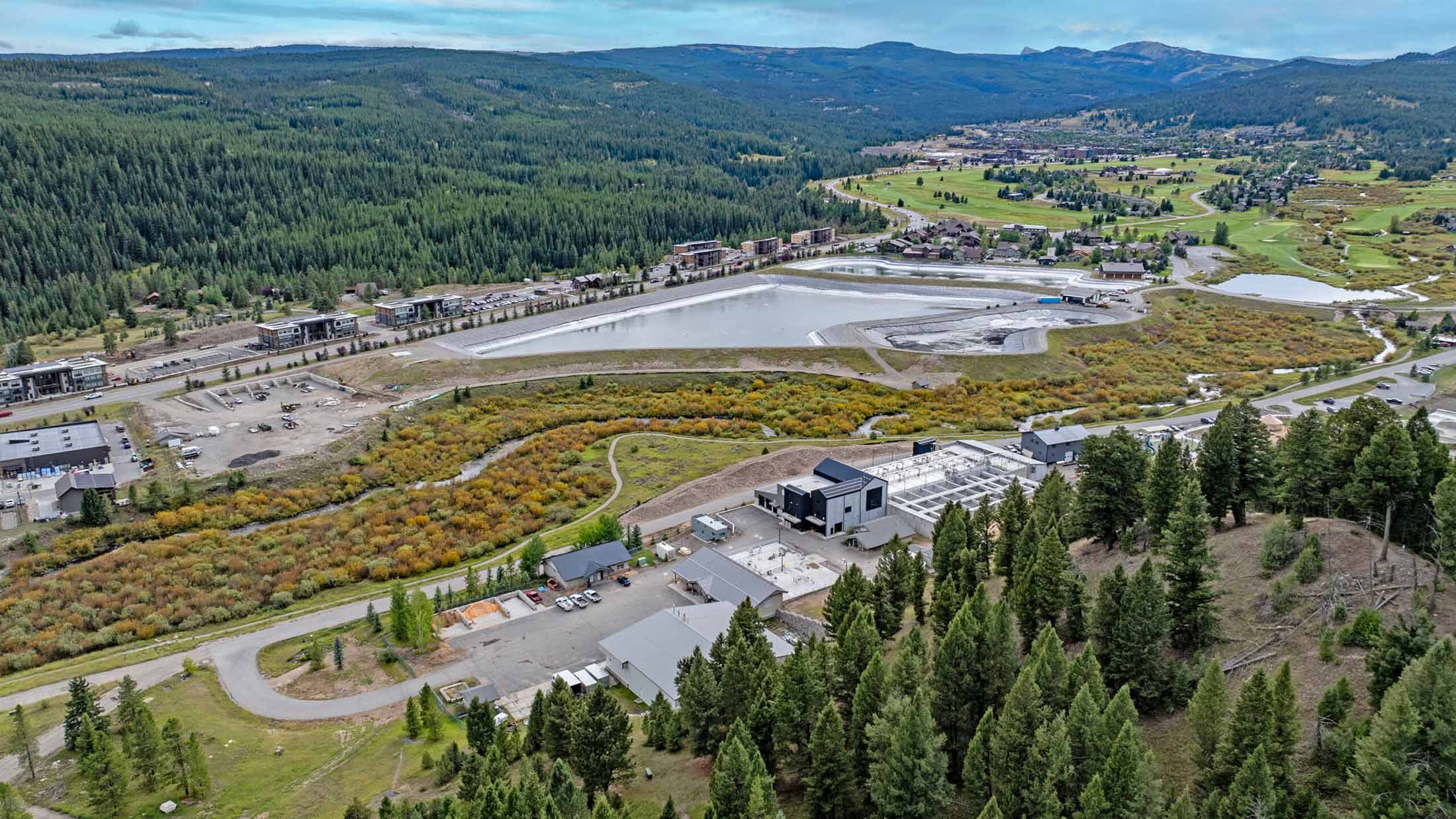
The Big Sky Water and Sewer District's Water Resource Recovery Facility (WRRF) treats wastewater to Class A-1 standards, enabling all of these reuse applications.
Learn more about the WRRF— bigskywatersewer.com/facility
What has been accomplished?
- Big Sky Water and Sewer District WRRF—A major capital investment to achieve Class A-1 water quality and maximize reuse capacity.
- Snowmaking Reuse at the Yellowstone Club & Spanish Peaks—In partnership with Montana DEQ, the Yellowstone Club became the first ski area in the state authorized to use reclaimed water for snowmaking in 2021, becoming fully operational in 2023.
- Golf Course Irrigation—Big Sky has irrigated its golf course and open spaces with reclaimed water for more than 30 years.
- Town Center Purple-Pipe Network—A dedicated distribution system for reclaimed water serving the Town Center area.
What projects are coming next?
- Gallatin Canyon Sewer—Expanding wastewater treatment infrastructure to address individual septic systems in Gallatin Canyon.
- Wildfire Purple-Pipe Network—Extending the reclaimed water distribution system to provide irrigation and fire suppression capacity in new areas of the community
- Wetland Polishing and Upper Watershed Recharge—Using natural wetland systems to provide additional treatment and recharge benefits
What are the key challenges?
- Continuing to improve treatment quality and expand reuse infrastructure as the community grows
- Expanding the options for reclaimed water use beyond current infrastructure coverage
- Managing low-flow, warm late-season conditions in the Gallatin and its tributaries
What are we working toward by 2029?
- Improved water quality in the Gallatin system by addressing existing impairments
- Expanded reuse infrastructure that reduces pressure on freshwater supplies
- More reclaimed water kept on the landscape—for irrigation, wildfire defense, and upper watershed recharge—rather than running downstream
- “Slowing the flow” through the system to improve late-season conditions for fish and aquatic life